
Note: Historically, I have subscribed to many of the more Protestant notions critiqued below. However, I now hold them to be erroneous and hope to help facilitate their remediation, if possible.

In my experience, it seems many in Protestant leadership, particularly within the Evangelical factions, tend to maintain a conceited disposition towards the Church Fathers without considering that perhaps the theologians of antiquity may have exhibited greater theological prowess than contemporary commentators steeped in a culture struggling to define gender roles. Ironically, while Protestantism has adopted a chiliastic outlook regarding its own relation to ecclesiastical history, its rejection of “regressive, medieval” sexual ethics arguably produced the exact behavior its conservative adherents routinely condemn in modern society.
The spark is damning the wildfire.
Recently, I stumbled across an example of this unfortunate haughtiness in a sermon by Pastor Mark Driscoll centered on the “biblical” understanding of sexual relations. While crudely indulging in commendations of deviancy and displaying an ineptitude in sexual teleology, Driscoll lambasted as primitive the eminent St. Gregory of Nyssa’s proposition that prior to the Fall humans reproduced through the consumption of fruit from the Tree of Life. The Saint’s hypothesis was subsequently mocked as a manifestation of the Church’s historic aversion to sexual relations and as being a consequence of the sexual oppression allegedly intrinsic to antiquity.
In reality, this standard narrative is a comprehensive perversion of the truth. In brief: sex mirrors salvation, and St. Gregory and the Church Fathers understood the dynamics of sex best because they truly understood the anatomy of salvation. Conversely, modernity understands neither sex nor salvation.
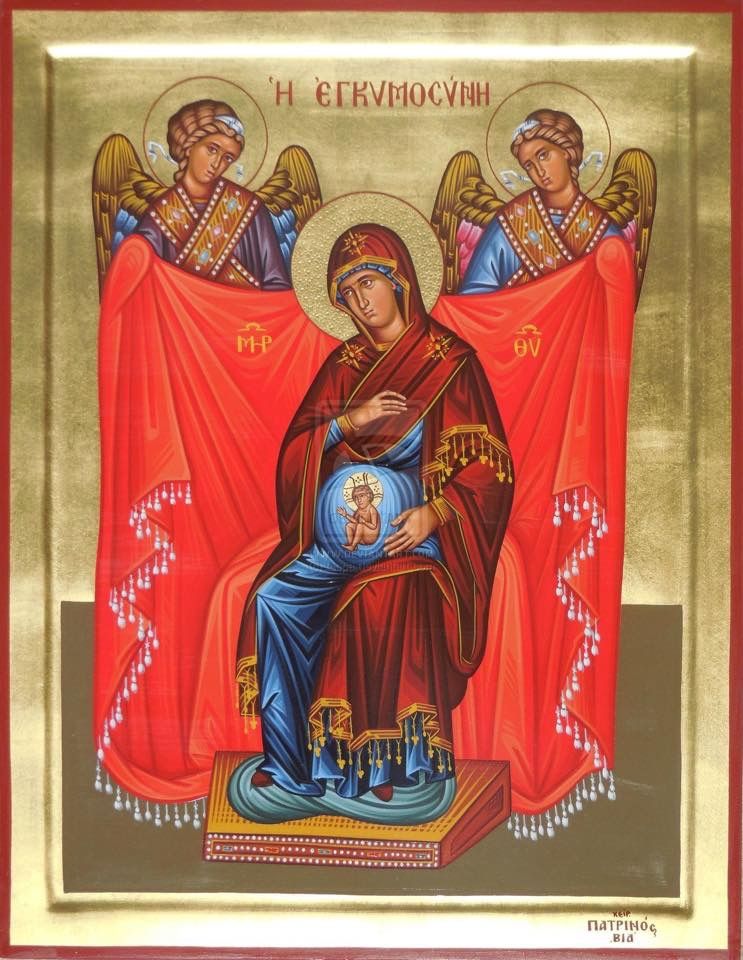
Indeed, the salvific nuptial union manifests in God the Father’s desire to consummate with our Mother Church, his Bride, in order to generate sons of God through the seed of his eternal love, the Holy Spirit. The fulfillment of salvation commences when the transcendent Heavenly Jerusalem descends into a penetrating union with the immanent Earthly Jerusalem, so as to produce together a recapitulated offspring – the New Jerusalem of a New World in which the sons of God dwell. We now observe these mystical realities only “dimly in a mirror,” as the natural world subsists as an imperfect reflection, but a reflection nonetheless, of the supernatural realm and of the New World to come. Fittingly, the husband – with his phallic propensities pointing towards the transcendent and universals – is an icon of the supernatural, while the wife – with her nurturing intuition inclining towards the immanent and particulars – is an icon of the natural; together their unitive love begets a child who serves as an icon of the deified sons of God and concurrently of the New World to come. To actively frustrate the intended end of the nuptial union – the generation of a child – is to archetypically subvert the supernatural climax of the spiritual life: salvation.

In my estimation, the Protestant domain chronically fails to apprehend this eternal truth; instead, its gnostic tendencies devalue and abandon the natural, feminine participant in the nuptial union, as its soteriology simply seeks to escape this world and abide everlastingly in an esoteric, masculine heaven. It has forgotten that salvation is, in fact, the result (the child) of the sexual union between both the mother and the father – not a mere escape into the bosom of the Father divorced from the Mother. “Creation groans” for the offspring of this nuptial union, whereby the natural world will be restored and, indeed, elevated through its consummation with the supernatural realm. For, just as a husband does not eclipse his wife but serves as a pillar upon which she rests, enabling her to become a resplendent beacon of love illuminating the world, so too does the Divine Husband elevate his Bride into a deified mode of existence while retaining the frame of her natural beauty. It is no coincidence that as Protestantism has abandoned the archetype of the woman (the natural world), it has embraced artificial methods of mitigating the production of children (the icons of salvation) that come through the woman, simultaneously propagating a misogynistic soteriology which focuses principally on running away from our home amidst her “birth pangs” so as to escape into the arms of the estranged, reclusive Father in his heavenly abode. [Interestingly, through this matricide, Protestantism sacrificed our queens and Mother, yet seems to have retained a shadow of our kings and Father through the modern presidential office. Perhaps, this is the oppressive patriarchy that contemporary feminism, with its own disordered spirituality and worldview, struggles to identify and articulate.]

In like manner, the dawn of the Protestant movement immediately ushered in an erosion of the foretaste of the eschatological union which can be found only within the Womb of the Bride, as the ecclesiastical revolution progressively frustrated God’s penetration into the natural world by destroying his immanence through the sacraments. The zenith of Christ’s castration was the revolt’s tendency to contracept the climax of sacramental union accessible in this world, specifically, the oral consumption of the Eucharist. Protestantism gradually diminished the reality of Christ’s presence in the Lord’s Supper, as his subsistence through the elements ceased to embody a nuptial union between the spiritual and the natural realms. Instead, Christ’s permeating love was degraded to mere infatuation by becoming a purely spiritual reality and then finally deformed into base fantasy through the alteration of the Eucharist into abject symbolism. Judging the Garden unworthy of the Tree of Life, eventually the movement altogether rejected the Divine’s immanence within the Church through his penetration of her super-natural sacraments, abolishing any prospect for substantive union and ultimately aborting the sons of God.
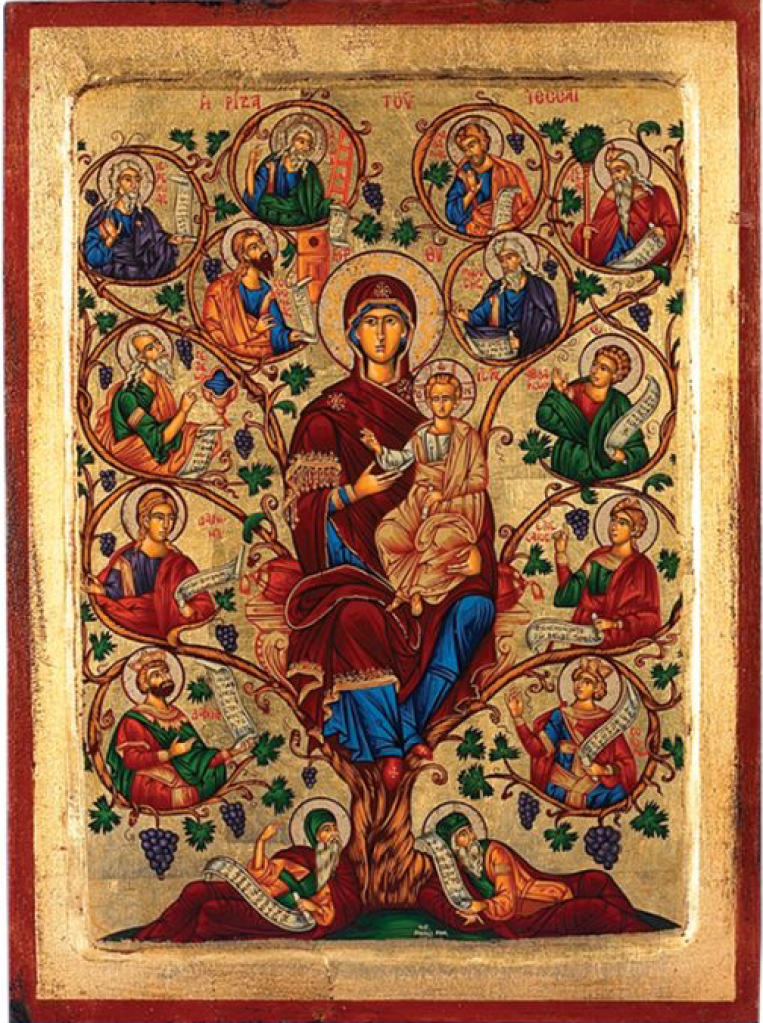
Inevitably, a theological system that discards the nuptial union embodied through the consummation of the Eucharist, in which the supernatural penetrates and deifies the natural, would consider as fantastical any notion that the oral consumption of the fruit of the Tree of Life could facilitate a form of reproduction. At the moment, I admittedly remain ignorant of the exact logistics of St. Gregory’s proposition, but in light of the nuptial union that is salvation, I can readily surmise various possibilities. As the sons of God now orally receive the Body of Christ crucified on a Tree into themselves through the elements cultivated in the Garden of the Church so as to “become partakers of the Divine Nature,” perhaps the Tree of Life within the Garden of Eden likewise bore fruit that served as an instrumental cause of Adam’s own adoption into divine sonship. If the fallen natural world of today still remains a shadow of the supernatural realm and of the world to come, then how much more would a natural world free from corruption and elevated in the Garden of Eden correspond with the supernatural archetype? It would then seem plausible, that in this mode of the world immaculately ordered towards a heightened existence, spiritual and physical consummation would be more intimately conjoined and exist as nearly one, harmonious nuptial act. For, as consummation with the Gardener in the sanctified Garden of the Church occurs orally through the Eucharist, perhaps nuptial union within the Garden of Eden more closely resembled this sacramental mystery, as our first parents may not have been ordered towards mere natural reproduction by their fallen loins but instead ordered towards an integrated super-natural generation of divine sons through an elevated oral faculty receptive to the penetrating love of God.
After all: “Greet one another with a Holy Kiss.”
†


 Tribe of Benjamin
Leave a comment