The following are reflections not fully complete in my mind but which may serve as springboards for future conversations and blog entries. They vary in topics and personal confidence regarding their respective propositions.
• General Thoughts •
• 1 •
Perhaps religion is merely an evolutionary coping mechanism by males to garner value as compensation for their biological expendability. For, less males than females are needed in order to propagate a population, ironically as a result of their sexual efficiency in conceiving children and the females’ inefficiency in growing children. Thus, most males are superfluous, as a single male can suffice to inseminate a group of females at a time – rendering imperative the preservation of as many females as possible. Conversely, men are largely expendable, animalistically speaking, and hence are in desperation to find something worth dying for – whereas women intrinsically possess a purpose to live for. Religion, perhaps, is the means by which men cultivate some semblance of value. What prevents me from accepting this position wholesale is that the archetypes of male and female exist on all levels of reality, and consequently there must be an instantiation of the masculine in referent to the natural, feminine world: this masculine referent to the natural world is termed the supernatural. Thus, if the feminine natural world exists, which it does, then her masculine supernatural counterpart must as well.
• 2 •
The essence of the Masculine: dissatisfaction with this world. Accordingly, it does not seem coincidental the Patriarchs of Israel were wanderers.
• 3 •
Men desire to struggle and die for something – thus modernity’s aim to facilitate ease in all areas of life have rendered men suicidal. This is the crisis of manhood. The office space is a microcosm of this epidemic. Men naturally desire the struggle of the outdoors while the comfort of an indoor office is more adapted to feminine preferences. When we see an animal inside a cage at the zoo we know he is not fulfilled in this unnatural state despite his ease of living. Yet, we have built our own cages and are surprised at our despair.
• 4 •
Interestingly, the female orgasm serves no utilitarian function, in contrast to the male’s. This has proven perplexing to scientists as they seek a biological explanation for its existence, however, from a philosophical perspective it appears its entire purpose is to ensure that the male refrains from debasing the conjugal relationship into a self-indulgent act and instead works to promote the good of the other solely for the sake of love. This is emblematic of a servant leadership that washes the other’s feet instead of a domineering authoritarianism that subjugates the other for personal gain.
• 5 •
All of salvation history has been the masculine, transcendent Divine drawing the feminine, immanent World into union with himself. Concurrently, females have experienced a progressive participation in the covenants of the Judeo-Christian religion and will perhaps experience the totality of incorporation in the New World. The Old Testament permitted only males to receive the mark of the covenant through circumcision while the New Testament allows both genders to receive the mark of baptism, yet the covenant still preserves a degree of separation as only males may experience the totality of Sacramentology through the Holy Orders of the priesthood. Perhaps in the eschaton, our new bodies will dissolve this distinction, with the Mother of God already foreshadowing this full intimacy between the Divine and the World. From our perspective on earth, the moon is the same size as the sun in the sky, allowing the phenomena of total eclipses to occur, despite them in reality existing millions of miles apart. The moon, moreover, shares with the earth the same essence of rock-ness while the sun distinctly maintains the nature of a star, yet from our position both the moon and the sun act alike in granting us light – the moon albeit refracting the light of the sun. Likewise, through her fullness of union with the Divine, the Mother of God appears nearly equal in honor to the Creator as she reflects the light of her Son to us, yet her shared human nature evidences her infinitely essential inferiority to the Source of her glory. In like manner, all of the redeemed will synergize with this glory during the eschaton, diminishing the distinction between the feminine World and the masculine Divine while simultaneously refraining from merging into an absolute singularity.
• 6 •
Gender archetypes appear to be more akin to a globe than a spectrum since the genders are defined in reference to each other. As one goes too far in one direction, he crosses over into the opposite gender, just as when one travels far enough East he ends up West. For example, if a male values masculinity to the point of completely devaluing femininity, his hatred for femininity turns him inwards on himself, resulting in masculinity consummating with itself: the essence of homosexuality. Thus, effeminacy seems to be more appropriately characterized as compounded masculinity, as opposed to feminine masculinity. Moreover, homosexuality seems to be an archetypical self-indulgence, as it strives to find an exact image of itself to consummate with, in contrast to the heterosexual love ordered towards another who is different from oneself. Tangentially, the Great Schism as well appears to manifest this “globe,” or nested inversion, phenomenon as each side demonstrates alternating feminine and masculine qualities in various areas of theology and society.
• The Great Schism •
• 7 •
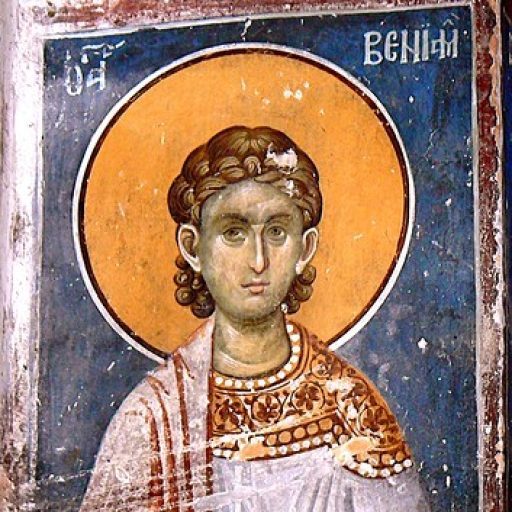
Western Christianity’s intense focus on the natural world may betray a systemic error as religion is generally a masculine propensity. The caricature of religion in the West as a feminine endeavor that attracts grandmothers is historically abnormal, yet accords with this modern emphasis of Western theology. Eastern Christianity, conversely, emphasizes the transcendent essence of religion and the inability of this world to facilitate salvation by itself. Accordingly, it has maintained a “patriarchal” participation. The art of both sides reflects their different theological emphases, as depictions of Christ in the West are strikingly effeminate (it seems to me any man behaving as Christ is often depicted in the West would be regarded as effeminate and discarded as a viable partner by heterosexual women), while Eastern Christianity maintains his rightly ordered masculinity. The homosexual crisis in the Western priesthood could be the result of this emphasis. Western artistic realism, statuary, lace vestments, and shaved priests are all embodiments of this feminine priority, while the Eastern symbolic iconography, regal vestments, bearded priests, and significant male participation in Church are fruits of the contrary.
• 8 •
The Church is an icon, as it is a natural entity assumed into a supernatural reality, just as an icon depicts a natural person symbolized in a transcendent space of noetic existence. Thus, iconography is the most fitting art for the Church, as opposed to the depictions of the Renaissance that tend to pull the Church from heaven down to earth. The depiction of our naked bodies inside the Church seems to miss the fact that we will receive new bodies in the resurrection – the West’s continued focus on this present carnal reality, instead of a heightened mode of existence, strikes me as off base.
• 9 •
The Spirit is who unites the natural person to the supernaturally ascended Christ and thus deifies our mode of existence by transposing it from the natural to the supernatural. Perhaps, the West’s Filioque really did essentially subordinate the Spirit and result in their inability to ascend to a heightened mode of existence, relegating them to a natural, non-deified mode of theology.
• 10 •
Eastern Christianity’s ecclesiological focus on multiplicity, absent of its complementarity with oneness, necessarily lends itself to being controlled by the State. Not merely for the pragmatic reason that there needs to be a source of unification in any system, but because the State is the feminine principle in referent to the masculine Church and concurrently a system that emphasizes the feminine principle of multiplicity above the masculine oneness will likewise prioritize the feminine State over the masculine Church.
• 11 •
Even if communism is a “Western import” as many Eastern advocates are fond of claiming, the East’s ecclesiological focus on feminine multiplicity renders them susceptible to a political system that rejects the legitimacy of individuality (a propensity of the masculine). Hence, even if originated by Western thinkers, communism struggled to take root in the Western culture that prioritizes individualism while finding fertile ground in the East.
• Protestantism •
• 12 •
Protestants appropriate Christianity, as they lack a wholistic and substantial practice. They adopt certain elements of historic Christianity but only while simultaneously decontextualizing them. American Protestants, for example, merely interpret the Bible in an American context and merge it with American values – despite the obvious fact that the Bible is a compilation of Jewish mail from 2,000 years ago. As a result, they create their own insulated conclaves based on values passed down in their respective communities, but not transferable to another community or based in Scripture and reason. Thus, various denominations maintain unique codes of conduct “just because” as opposed to a coherent “why.” Ultimately, this can facilitate a cultish mentality where the head pastor is the arbitrator of acceptance in the communities, divorced from objective, rational standards.
• 13 •
Protestants assume that by “Tradition” apostolic communions mean traditions divorced from either reason or Scripture – because those are the the types of traditions Protestants themselves maintain. As an example, non-denominationalists retain a “sanctuary” in their churches despite believing that there is no intrinsically sanctified place to worship – a tradition contrary to doctrinal coherence and divorced from the entire Protestant ethos but which they preserve simply “just because.” Conversely, what apostolic communions mean by Tradition is: the way the Church has always implemented Christ’s teachings, being integrated with reason and Scripture.
• 14 •
Protestants tend to be ignorant of Christianity outside their own insulated communities. Baptists claim “all Christians who believe in Christ are saved” but then when confronted with the existence of Lutherans, they discard them as basically condemned Catholics – despite the fact that they are the founders of Protestantism. These lower church Protestants will celebrate Martin Luther’s revolution and then denounce Christian sects less Catholic than Luther himself.
• 15 •
I fear Protestants primarily have one fundamental guiding theological principle: anti-Catholicism. Lucifer can only be “anti,” he cannot create but can only destroy. God is “pro” something, in that he has the capacity for positive creation. Unfortunately, Protestantism may mirror Luciferian tendencies in this respect by remaining largely an anti-religion.
• 16 •
The Bible is arguably the Southern Kingdom of Israel’s propaganda against the Northern Kingdom. But that remains perfectly fine since God works through instrumental causes and providentially guides history. Likewise, poor Emperors, Popes, Patriarchs, bishops, and priests do not invalidate the systems that they inhabit. In Protestant ideology, it is difficult to accept any of the preceding – as they routinely establish entirely new churches any time there are issues with leadership in their congregations. Thus, their church identity is based on the singular leader of whichever church they join. Unfortunately, this can result in a mentality more akin to cults than churches. This is in contrast to the members of traditional Christian churches who subscribe to the entire edifice or institution of the Church – not a single leader; indeed, oftentimes in spite of the leader.
• 17 •
From my perspective, the Bible is the most Catholic-Orthodox book I have ever read. The diverse interpretations of its contents across all Christian identities demonstrate the inadequacy of mere text to communicate the totality of an author’s intent. Modernity aptly demonstrates this reality as emails, phone texts, social media posts, and the like are routinely misunderstood and the author’s tone mischaracterized. “Tradition” is God’s ordained in-person verbal explanation of text that prevents this widespread confusion from occurring. The Protestants only have access to the text message God has sent and not his personal, verbal explanation of the text’s meaning. The fact that Peter writes in Scripture itself that many have misinterpreted Paul’s writings, resulting in their own damnation, would seem to immediately dispel the Protestant notion that the biblical text is intrinsically sufficiently clear on matters of salvation. Ironically, many Protestants twist themselves into knots in order to explain that this is in actuality not the true meaning of Peter’s words. The contradiction is striking as they defend their position that the Bible is sufficiently lucid in doctrinal matters by attempting to persuade their interlocutor that his initial interpretation of the Scripture is erroneous.
• 18 •
Protestantism generally turns all of Scripture into a gnostic mirage that is essentially a metaphor with no bearing on reality – it exhibits a compartmentalized philosophy. For example, Protestants tend to chalk up the phrase “the Body of Christ” to a mere metaphor that only underscores Christ’s desire for Christians to be united in doing his works like the hands and feet of a body. It is simply a poetic simile. But the apostolic communions ascertain that salvation is a mystical union with Christ like the marriage between man and woman, but to an even deeper extent, resulting in us truly being joined to Christ’s supernatural Body – not metaphorically. Thus, the Church really is Christ. Hence, also why the Church is infallible since Christ cannot error.
• 19 •
Protestantism precipitated transgender ideology through its notion that salvation consists solely of an internal acceptance of Christ without any tangible conditions. Thus, a Protestant identifies himself as being saved without any tangible realities facilitating the ontological change. Conversely, tangible baptism has always traditionally been the means by which an individual is incorporated into the faith – not just a personal declaration that alters reality by virtue of itself (characteristic of both Protestantism and Transgenderism). The Protestant and Transgender perspectives seem to be rooted in a nominalist philosophy which posits that universals are merely mental conceptions and have no actual basis in reality.
• 20 •
Protestantism’s radical separation between the supernatural and the natural, as well as its corresponding minimizing of human involvement in salvation, results in the transcendent having limited impact on this natural world and this current life. As a result, if an individual does not choose the logical nihilistic route of suicide to escape this present reality that has no bearing on the next world and instead still believes that this life is worth preserving, then all means of improving this current existence will be primarily natural since it is entirely cutoff from the supernatural. This explains the complete Protestant obsession with politics, as it is subconsciously the only method they consider capable of effecting change in this world. In contrast, if one holds that the supernatural and natural are intertwined, then involvement in religious efforts will be even more effective at bettering society than natural, political means. Inversely, the great divorce between the supernatural and natural also causes Protestants to consider natural goods as antithetical to spiritual goodness, resulting in the arts, recreation, entertainment, and the like being considered pagan if they do not explicitly invoke God.
• 21 •
The shallow theological pragmatism of Protestantism undercuts intellectual ingenuity and results in the brightest Protestant minds gravitating towards politics or the natural sciences, as their own theological framework is inadequate to satisfy intellectual impulses.
• Politics •
• 22 •
America may only be the greatest country in history if the criteria is based solely in materialism. For, it has created the greatest advancement in economic wealth the world has ever witnessed – but if a nation turns the average citizen into a rich yet suicidal, 500-pound diabetic who has never experienced happiness a day in his life, then it is probably not the greatest system ever produced. Virtue and fulfillment are better barometers of the success of a country than material wealth. I would rather die fulfilled than filled.
• 23 •
America separated from Britain based primarily on taxation. The colonies did not escape a totalitarian regime suppressing human rights like modern day China. Considering this context, the habitual exclamation of “Thank God for our freedoms” comes across hyperbolic at times. Some recontextualizing of American history that departs from the “God-anointed, pinnacle of humanity” narrative and instead shifts to the more realistic recognition that the colonies were a conglomerate of disgruntled taxpayers that beat the odds in their protest of the British IRS would be more sane.
• 24 •
America radically divorced the feminine State from the masculine Church, and hence the masculine and feminine archetypes have been in tension, as opposed to harmony, ever since the founding. This manifests in the more feminine left-wing warring against the more masculine right-wing, instead of them rejoicing in their complementarity and both finding outlets for their equally valuable qualities. A two-party system accordingly seems to be a perfectly natural mode of operation – yet they should not be a warring Hegelian dialectic but rather a union of love. This American travesty is further demonstrated in the lack of an established feminine or mother figure in the governmental system. However, one has historically vigorously fought to manifest in the First Lady, and now more officially, through the necessity of the male President selecting a female as his running mate in the Vice President position in order to appeal more broadly to the electorate.
• 25 •
Liberals have the correct criticisms of Conservatives, but the wrong conclusions. They unfortunately adopt the faulty premises of Conservatives that undergird the exact conclusions that Liberals so despise in the first place. An entirely new paradigm shift must occur in order to remedy the issues that both Conservatives and Liberals identify: specifically, a paradigm that maintains the complementarity and necessity of both the feminine and the masculine in society.
• 26 •
Free-Market Capitalism will never promote the best of society, as it only rewards that which the majority desire. The majority, nearly by definition, are not the best a civilization offers.
• 27 •
Rigid constitutionalism, as a general political philosophy, is reflective of pragmatic Protestant theology. The inability to intuit abstract moral principles necessitates coalescing around mutually agreed upon social contracts. Deviation from the social contract would throw the culture into an entirely unnavigable context as its people lack virtually any transcendent principles to guide their actions. Thus, they clasp onto whatever foundational document they create together, regardless of any cognitive dissonance doing so requires and without entertaining the possibility that the tenets of their social contract may have in fact been erroneous since its very inception.
†


Leave a Reply