Note: This is not a pastoral entry but a philosophical reflection. To anyone with gender dysphoria or identifying as transgender, I do not claim to be capable of understanding that experience. This entry is not an attempt to lecture on the morality of a life decision but rather it is an analysis of the philosophical underpinnings of transgenderism.
A society’s understanding of the greatest good or the highest being undergirds and informs its perspective on all subordinate levels of existence. As a waterfall weathers and transforms the surface of a cliff in its descent, so too does a culture’s highest good cascade into the lower rungs of the world, shaping them in its image. With societal acceptance of apostolic Christianity waning, confusion regarding the nature of gender has exponentially grown. This is to be expected, for the Triune distinctive of the Christian God is the only philosophical position capable of harmonizing Feminine multiplicity and Masculine oneness; both being equally integral for the preservation of the world. Conversely, the radical individualism of the Protestant and American spirit necessitates a societal misogyny and Luciferian confusion of gender that singularly leads to death.

Foundational to the ancient Christian traditions is their unique Trinitarian understanding of the highest being which harmonizes universal gender archetypes through its preservation of oneness and multiplicity. Specifically, this Trinitarian God is headed by one single Father who exists in an eternal communion of love with a multiplicity of Persons intrinsic to his substance. The Persons are his Son, whom the Father eternally loves, and his Spirit who eternally communicates the love between the Father and the Son. The Persons of the Trinity are all inherent to each other and have never, nor can they ever, exist without each other, as the Son and Spirit’s existence are not an act of the Father’s voluntary will but are natural to his very being. To describe the Triune God, the patristic writers often utilize the analogy of the sun which is innately composed of light and heat – the light and heat are natural to the sun and inhere each other, just as the Son and Spirit are natural to the Father and indwell one another. If one of the Persons were to not exist then none of the Persons could exist, for the Father’s personhood is defined by and demands the Son and the Spirit; the Son’s personhood is defined by and demands the Father and the Spirit; and the Spirit’s personhood is defined by and demands the Father and the Son. In this paradigm, there is no room for isolated individualism devoid of feminine multiplicity, rather the true personhood of each of the Trinitarian Persons is established upon their relationship to the others – it is an eternal communion of loving thy neighbor. Accordingly, Christ explains that the greatest commandments are to love God and to love thy neighbor, for they are fundamentally the same commandment simply in different contexts.
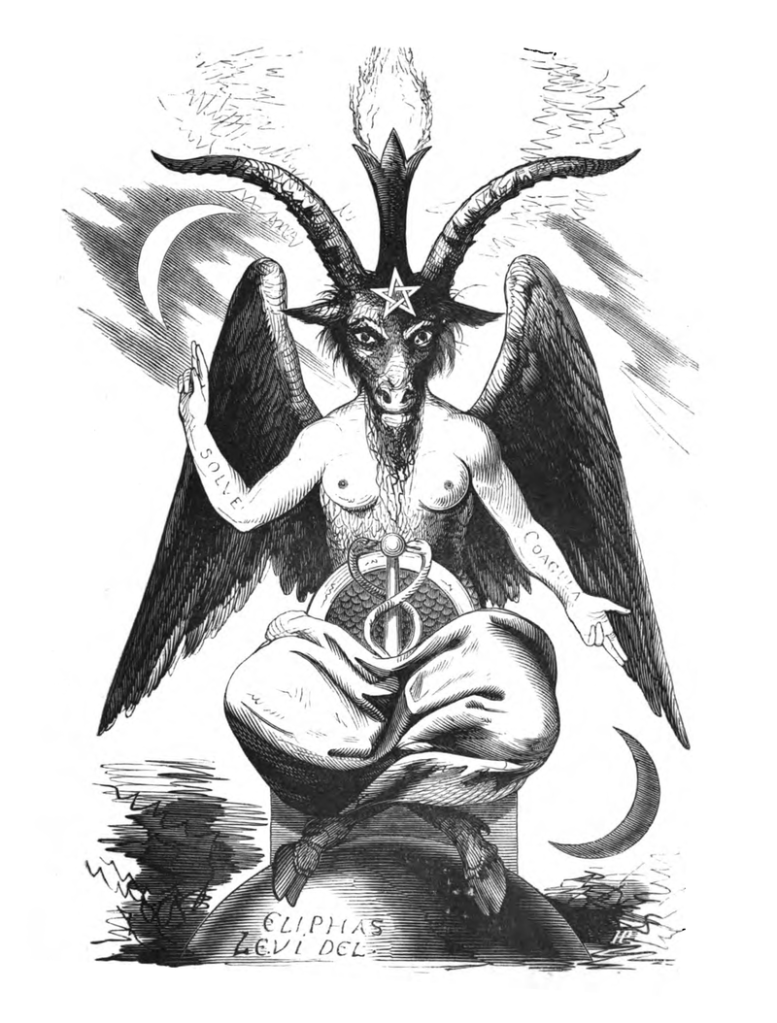
Created in God’s image, mankind took on the divine shape of being defined by his neighbor and being ordered towards another, with the Masculine and Feminine only existing through their distinction and interdependency. As icons of the divine, the Masculine and Feminine are insufficient in themselves to accomplish the reproduction of life, as their respective genitalia are designed and ordered towards the harmonizing genitalia of the other, necessitating each other for their continued existence. The good of the world is contingent on the preservation of this complementary duality in all respects: physically, spiritually, psychologically, and archetypically. In contrast, the merging of the Masculine and the Feminine is the Luciferian objective, as it destroys their relational goodness and ultimately nullifies their capacity for life. The Baphomet parades the satanic inversion of the divine communion: one person selfishly possessing in himself the dual-gender properties that rightfully belong to another, in a duplicity of self-love and self-sufficiency. This is the great “I AM” without “God is love,” for in the Baphomet’s blasphemous existence there is no one else to love – he is ordered towards himself alone. His spectacle of sufficiency based in radical individualism is all a mirage, as, despite his apparent dual gender, the Baphomet’s properties are incapable of consummating with each other to produce life; and so too is the Luciferian ideology, that blurs the divine distinction between the Masculine and Feminine, powerless to promote the good of the world. The Baphomet’s impotency can only lead to death. Conversely, God’s love is life and singularly through the imitation of this eternal divine communion can mankind live, for only by the preservation of humanity’s distinctions and telos towards each other can the reproduction of life endure.
Indeed, being dependent on each other for continued existence and self-definition, the Masculine and Feminine exhibit various idiosyncrasies emblematic of their archetypical complementarity. Explicitly, the Masculine normatively serves as an icon of the initiator, transcendent, and oneness principle while the Feminine reciprocally symbolizes the synergistic, incarnational, and multiplicity principle of the universe. The Masculine’s archetype can be derived from his intrinsic advantage of strength, as well as his acumen in the transcendent thinking of problem solving, both of which allow him to more easily survive in isolated contexts and naturally maintain leadership functions. These qualities undergird his signification of the one or the head, as he maintains a tendency for individualism not ordinarily characteristic of the more physically vulnerable gender. Correspondingly, his family adopts his last name in order to signify its oneness amidst its many parts. However, this oneness or propensity to individualism can devolve into the Baphomet’s singularity if not counterbalanced with the proper orientation towards the other or to multiplicity, namely, to union with the Feminine.
The Feminine is not the initiator or head, as she does not operate in the context of individualism, rather she is the synergistic principle that receives, particularizes, and nurtures that which the Masculine initially provides. This can be characterized as a nurturing of “amplification” through which, when rightly performed, she makes all things that the Masculine offers to her even greater. Conjugal relations are emblematic of this relationship, as the Masculine initiates the penetrative act and offers the Feminine mere sperm – yet the Feminine miraculously transubstantiates this material into the very image of God. In this way, the Feminine continually instantiates the one name of the Masculine into a multiplicity of children who take on that one name in the familial context. Not only is she multiplying the one name of the Masculine, but she is instantiating his abstract and transcendent love into an incarnate mode: their child.
In fact, with the child initially indwelling the mother at the moment of existence; the initial state of the child always being feminine prior to the introduction of testosterone; and the child not meeting the father until emerging from the womb; the Feminine embodies throughout the entire process that which is near, natural, and incarnational while the Masculine symbolizes that which is far, supernatural, and transcendent. Her personification of multiplicity and her incarnation of the Masculine transcendence, reveals the Feminine as analogous to the body’s many parts, integral to the flourishing and survival of the head. Thus, as the transcendent Head of the Church descended, not to subjugate, but to elevate the incarnational Body of his Church without compulsion, so too must the transcendent Masculine consensually synergize with the incarnational Feminine in order to lead her and the entire family into a higher pitch of existence. For as a body cannot exist without a head, nor a head without a body, the interplay of the Masculine and the Feminine must not tend towards the Luciferian abolition of the other but rather epitomize their reciprocal distinction essential to the preservation of themselves and of the entire world.
Conversely, the ideology of Transgenderism nullifies the vitality and complementarity of the archetypes, as it initially posited the possibility of simply changing genders and is now devolving into the Baphomet notion that a person can be both genders simultaneously, or perhaps neither Masculine nor Feminine altogether. Inevitably, this leads to mutual extinction as the two archetypes are intrinsically defined in referent to each other, and their consolidation signals a false self-sufficiency that negates the potency of life in the world. The blurring gender-confusion of the Baphomet has begun to take full root, leading to castration, self-inflicted impotency, and inevitably societal death as the instruments of life are increasingly mutilated. Often considered merely a modern phenomenon, in reality, this infirmity infected the world’s consciousness centuries ago and the contagion’s ultimate form is now taking shape. Specifically, through the Protestant revolution, the seeds of an unbalanced Masculine individualism were planted. In response, women gradually adopted Masculine qualities to merit cultural value, foreshadowing the Transgenderism of modernity.
The Protestant rejection of Feminine qualities, particularly synergism and multiplicity, manifests in the notion that every man suffices as his own arbitrator of doctrine and intrinsic possessor of all priestly faculties through a supposed charism of the Holy Spirit, which expels the virtue of dependency on divinely-appointed authority figures. The common man no longer needs to rely on God through his neighbor for truth, but instead all power now resides within himself, fostering the ludicrous self-sufficiency of the Baphomet. Of course, this self-sufficiency is merely a delusion, for just as the Baphomet through himself or the transgender person through his altered genitalia are both incapable of reproducing life in spite of appearances, so is the Protestant incapable of generating divine life in the Eucharistic sacrament contrary to his claim to the fullness of spiritual charisms. In reality, neither is he able to discern doctrine and dogma, as his claimed Spirit of Truth has lead all Protestants to disagreement on every single point of theology, casting doubt on the actual nature of the spirit guiding them.
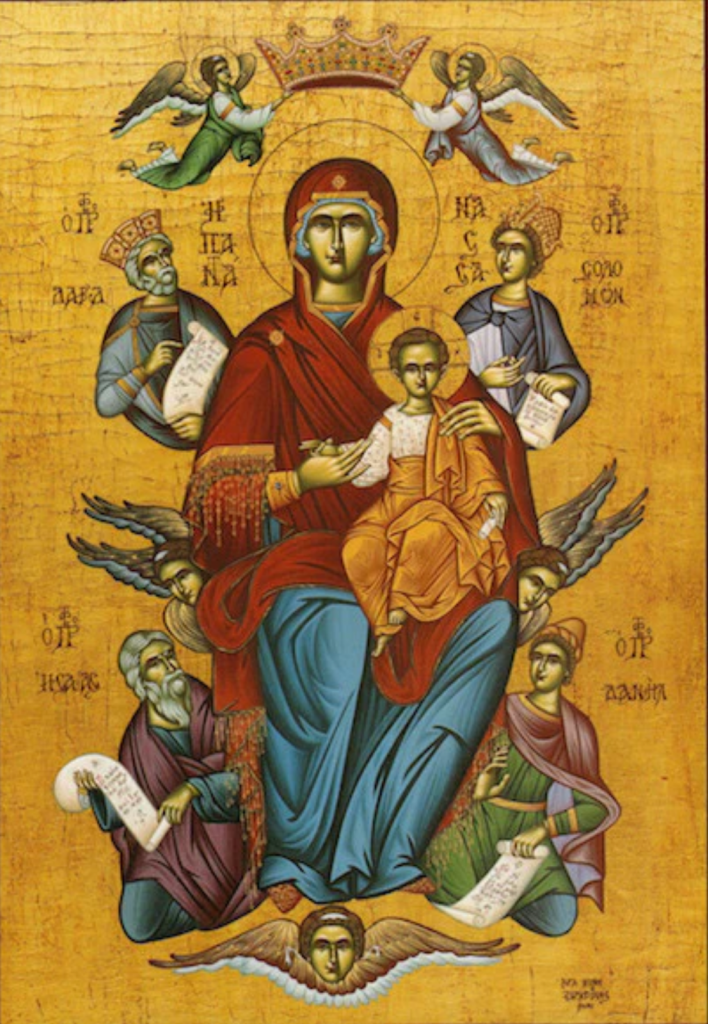
In addition to this Luciferian impotency of the Protestant paradigm, the revolution’s doctrinal cornerstone of forensic justification is an understanding of salvation that favors the Masculine archetype over and against the Feminine. Precisely, the redeemed man is considered righteous simply in the mind of the transcendent God without any actual consequent in the incarnational person. However, apostolic communions have always held a consummatory view of salvation which defines that the righteousness of justification is God’s transcendent righteousness infused into the incarnational individual. To maintain its position, Protestantism has virtually had to posit soteriological rape by which the receiver of God’s salvation is incapable of synergism with God, the initiator of salvation, and is instead left without any consensual participation in redemption. In the apostolic communions, the Mother of God – being feminine of course – is the epitome of synergism with the transcendent archetype; and consequently, as Protestantism discarded the Feminine elsewhere, its rejection of the significance of the Theotokos was inevitable. Apostolic communions underscore that God did not force the Theotokos to conceive his child without her consent, rather her “yes” was necessary for the salvation of the world. This one synergistic act of obedience allowed mankind’s redemption to take place through her and continues to serve as an icon of the Theotokos’ role throughout the entire process of salvation. Since the ancient Christian traditions affirm the legitimacy of the Feminine principle, they truly believe the Scriptures when they state that the redeemed, as the Bride of Christ, become one with Christ. It is a real marriage, indeed, the most intimate marriage – not a mere metaphor. As a result, to the degree that a believer is sanctified and united to Christ, he partakes in the works of Christ – all his works – just as the Trinitarian Persons partake in each other’s works. This is the divine life of which we partake through grace, becoming “co-workers with Christ,” as St. Paul writes. Hence, in her role as the New Ark of the Covenant, which was considered by the Israelites incorruptibly fashioned, she participates to the utmost in the divine life that a creature is able to – not by her own nature but by the grace which has glorified her nature, as the moon reflects the light of the sun. Thus, her union with, and simultaneously her distinctiveness from, Christ perfectly symbolizes the proper synergism between the Masculine and the Feminine principles of the universe which Protestantism, in its radical individualism, has destroyed.
Likewise, Protestantism’s soteriological misogyny has now deteriorated into a completely gnostic understanding of sacraments, ritual, and worship divorced from the incarnation of the Feminine. As the mother is the location in which the child’s body is developed, so the Feminine is also the archetypical principle of body, incarnation, edifice, structure, etc. – after all, Christ took his humanity from the Theotokos. Thus, the rejection of the Hebraic-styled, liturgical worship that Moses and John detailed in Scripture, and of sacraments which are physical instruments that impart grace, gradually became intrinsic to the Protestant sects which view incarnational “ritual” and material as diametrically opposed to transcendent salvation. The two simply cannot consummate in the Protestant worldview, instead the transcendent and bodiless archetype must subjugate and extinguish the incarnate. Accordingly, Protestantism has devolved from what could once be characterized as a religion, into disconnected individuals following the unstructured whims of their emotions which they mistake for a divine Spirit. All apostolic communions, however, intuitively understand that the consummation of the Masculine and Feminine preserves the Church and deifies the world, as the transcendent Spirit always infuses an individual into the structured and incarnated Body of the Son; for he is the Spirit of the Son, and in fact the “Spirit of order, and not of confusion,” as St. Paul admonishes. Through the Feminine materialized sacraments and liturgy of the Church deified by union with the Masculine transcendence of Christ, the ancient Christian traditions uphold the vitality of both archetypes in the face of Protestant misogyny. Indeed, it is of no surprise that as the Protestant revolution has progressed, its various sects have gradually denied the Triune nature of God that entails a union of oneness and multiplicity, as well as precipitated a transgender femininity that bases its value in masculinity.

With America, and much of the modern West, undoubtedly being founded on Protestant thought, the nation’s consciousness has served as a full-blown icon of Protestantism’s misogynistic individualism. Central to the American ethos is “pulling yourself up by your bootstraps” — an intense self-sufficiency that considers assistance from a neighbor as degrading. While a degree of self-productivity is evidently virtuous, the fixation of the American mind on individual rights, apart from responsibilities to one’s neighbor, bars both the subject and his neighbor from entering into the divine life of consummated oneness and multiplicity. In fact, today, the mere idea of dependence on another in nearly any capacity is routinely lambasted as “communist,” “leftist,” or “laziness” – all epithets to deride any notion of the necessity of Feminine multiplicity for a holistic existence. Trinitarian interdependency is reflexively considered repulsive in our modern paradigm, as society has bought the misogynistic lie that independence and self-sufficiency are the highest goods – when in reality, left unchecked by Feminine synergism, they are Luciferian.
The unfortunate state of modernity is that feminism has correctly recognized the societal misogyny of Protestant America, however, in its diagnosis it has adopted the faulty premise of its adversary which asserts that only the natural abilities of the Masculine are valuable. Consequently, feminists now strive to become like men, instead of defending their unique set of Feminine properties equally integral to the survival of the world. As an example, feminists have rejected their capacity to propagate the Masculine oneness into multiplicity through childbearing and instead embraced the slaughter of their own children in order to adopt a Masculine independence. Indeed, abortion is the ultimate Luciferian sacrament of the American religion, as it is a continual instantiation of the sacrifice of the other for one’s own gain, as opposed to the Eucharistic sacrifice which is the re-instantiation of Christ’s willful self-sacrifice for the gain of others. In an individualistic society guided by the question of “what right do I possess,” the good of a person who is indwelling a woman is at least negligible, if not even an impediment to that woman’s “rights” — specifically, her “right” to bodily autonomy. However, if the good of one’s neighbor is instead the fundamental synergistic principle directing society, as Christ taught, then a mother intrinsically maintains the responsibility to preserve the wellbeing of her closest neighbor: the child dwelling within her.
The “rights” of the American individualist can only exist in a misogynistic context which denies the vitality of the Feminine multiplicity consummating with the Masculine oneness. America has subsequently been psychologically transgender since at least the dawn of the feminist movement, and the current state of the nation is simply a physical manifestation of this misguided response to radical individualism. For, the Protestant and American cohorts in archetypical misogyny catalyzed a transgendered feminism that necessarily precipitates the Luciferian consolidation of gender terminating in the sacrifice of human life, unless redeemed by the Trinitarian communion of interdependent love.
• Addendum •
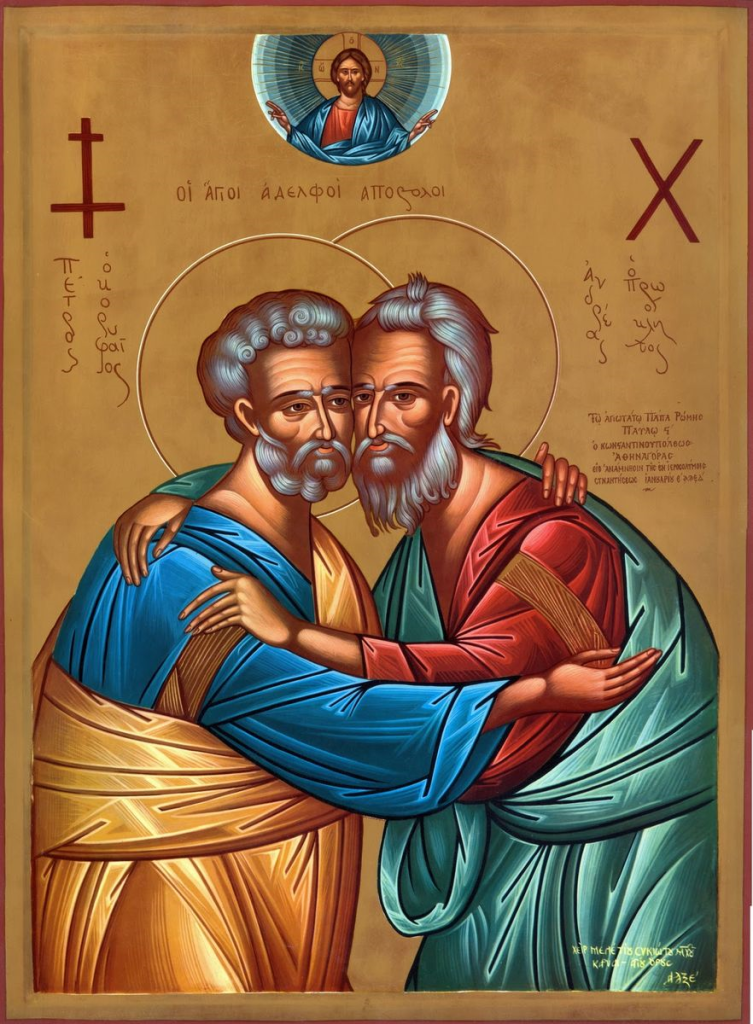
I have saved these subsequent reflections for the postscript, as I have yet to solidify the following positions in my mind, and as a result I prefer that my developing conjectures not detract from the arguments I set forth above. It is my growing belief that the Protestant fixation on individualism, and the theological misogyny it entails, did not develop in a vacuum. Rather, centuries before the Protestant movement, the Great Schism between Western Christianity and Eastern Christianity took place, arguably over the balance of oneness and multiplicity. The West possessed the Archbishop of Christendom (a title used by ecumenical councils), known commonly as the Pope, while the East possessed the four highest ranking bishops, termed Patriarchs, below the Pope. The Great Schism was fundamentally over two doctrinal disputes: 1) the nature of the Pope’s role as Archbishop of the world in relation to all other bishops and 2) the eternal origination of the Spirit in the Trinity. I posit the two issues are intrinsically connected, since ecclesiology reflects Triadology as the Church is a participation in the divine life. Thus, a divergence in views regarding the relations of Persons in the Trinity will naturally entail a discrepancy concerning the relations of persons within the Church hierarchy.
The West, and I argue the ecumenical councils, considered the Pope to be the head of the college of bishops. As head, he is the oneness principle that preserves the unity of the Church. Based on the divine promise that Hades cannot prevail against the Church, the West extrapolated that Hades could not then prevail against the representative, the head, of the whole Church either. Accordingly, the Pope has been considered intrinsically indefectible by the West, and concurrently, his declarations require the consent and synergism of no one in order to be true or binding. The East, alternatively, with its four Patriarchs being representative of the entire apostolic college outside of the West, served as an icon of the body of the head bishop and of the multiplicity of the Church. Correspondingly, the East’s magisterial authority (to borrow a Western term) was based on a synergism of collegiality which defined doctrine and canons through mutual agreement in the context of councils. The Acts of the 7th, and final, ecumenical council shared by the East and West embody this conciliatory, as a prior synod was rejected by the 7th council primarily due to its failure to garner the acceptance of both the Pope and the Patriarchs.
While the power struggle between the Pope and Patriarchs grew in the background, on the surface, a raging dispute over the Spirit’s origination explicitly threatened the unity of the Church. Consistent with its ecclesiological tendencies, the West focused on the oneness of God and posited that the Spirit has his existence from both the Father and the Son simultaneously as a singular source. Whereas, the East reflected its preference for multiplicity by maintaining that the Spirit originated from the Father alone and then eternally rested in the Son, so as to preserve the distinction between the Father and the Son. Unfortunately, this Trinitarian spat would be the fundamental issue cited by both sides as the cause of the Great Schism.
Their respective inclinations, I believe, also bore out in their devotional life and overall aesthetics. The West, at least since Augustine, bestows a supremacy on transcendent grace in the individual’s salvation, while the East has often emphasized a more synergistic paradigm between the recipient and the Bestower of grace. Accordingly, the West’s architecture developed into a phallic model, most evident in the gothic period, yet the East retained the mammary shaped domes evocative of the nurturing feminine nature of the Bride of Christ and Mother Church. Once their evolving estrangement climaxed in the Great Schism of the second millennium, the East and West’s respective tendencies were only exacerbated without each other around to serve as mutual counterbalances. The pinnacle of the West’s emphasis on oneness was its definition of Papal Infallibility in the 19th century absent of any clarification on the Papacy’s relation to the entire episcopate, and inversely, the zenith of the East’s multiplicity has been the Russian Orthodox’s habitual rejection of any notion of a universal head of the Church.
The West’s Vatican II council in the 20th century, nevertheless, strove to articulate some notion of the authority of the entire episcopate, and the modern Greek Orthodox Church has claimed that a head bishop with unique prerogatives is fundamental to the nature of the Church (to the chagrin of the Russians). Both developments serve as hopeful indications of a growing consciousness of each side’s need for what the other historically has offered: a head and a body, respectively. The unfortunate reality is that these seemingly positive developments are routinely mired in a Masonic ecumenism marked by religious indifferentism that regularly violates the divine canons, and so any hope they foster comes with a disconcerting asterisk. But I digress.
Ultimately, the oneness of the West, unchecked by the multiplicity of the East, was implicitly criticized by the Protestants in their disdain for a papal monarchy and yet ironically it has been radically adopted by every Protestant man who became a Pope in and of himself. Now each Protestant and each isolated church on every street corner is considered sufficient to define Christian truth — they claim no need of a neighbor. The one Catholic theological position that the Protestants deliberately retained is, interestingly, the Western understanding of the origination of the Spirit — this does not seem merely coincidental in my opinion. Much more can be said, but this will be reserved for a future post. In conclusion, perhaps the East at times has swung too far the other way in its preference for multiplicity, but the West also seems to have historically exhibited a tendency towards Masculine oneness that modernity has intuited and yet failed to correctly diagnose.
†


 Tribe of Benjamin
Leave a comment