The following is a list of ~215 books that I have read during the past several years on my road to Catholicism. I have attempted to sort the books below into categories and rank their reading difficulty (1-5), as well as provide embedded links to purchasable copies. I hope this may help those desiring to venture deeper into their own theological journey but who have remained unsure where to begin. (Apologies for any lackluster formatting – WordPress is not exactly excelling.)
In addition to the works subsequently outlined, I have frequently utilized Amazon’s 400,000 page virtual collection of the Church Fathers’ writings – which, incredibly, can be purchased herefor merely $2.99! A remarkable deal, nearly unfathomable. The search function proves exceptionally helpful in pinpointing the Fathers’ opinions on key subjects.
Moreover, for the inquirer, I would especially suggest studying various Papal Encyclicals here, and then similarly Eastern Patriarchal Encyclicals can be read here as well.
The digital age likewise provides a myriad of online apologists who can help the inquirer learn about their respective positions quite expediently compared to the classic physical book. I recommend the following apologists (I have embedded their YouTube Channels):
There is obviously no need to read all of the works outlined in this post. In fact, I personally ended up far too immersed in the infinite mire of research, with several of the books being fairly repetitive in content. As a result, I’ve emboldened and italicized specific works that I believe would efficiently summarize nearly the same breadth of material, if the reader would prefer to limit the amount of research (I will say, however, in order to really see the Papacy and Council in action, the inquirer will want to read the Acts of the Ecumenical Councils – of course this is not necessary for conversion, but there really exists no better case studies for the doctrinal positions pertinent specifically to the Schism).
“Now there are also many other things that Jesus did. Were every one of them to be written, I suppose that the world itself could not contain the books that would be written.“
*Photios’ “Mystagogy” is listed in the “Church Fathers” section below. This is probably an oversight, as it is an Orthodox perspective on the procession of the Holy Spirit and would be better placed in this section. I would also suggest his “Letter to the Eastern Patriarchs” in order to understand the Schism further.
*Book of Concord, I believe, is the only work in this blog post I have not yet read – but I wanted to list it, as it seems to be a great resource for the Lutheran position. **All these authors disagree with each other on theology, so I am quite at a loss at what to recommend for the supposed “Protestant position.” ***I remember combing through Calvin’s “Institutes” in college and then looking up his citations, only to find him repeatedly butchering the Fathers of the Church by taking them wildly out of context. So his works are not listed here, as I promptly gave up reading them. ****Similarly, I have found James White to either dramatically misunderstand or grossly misrepresent the Catholic position to the point of being intolerable to read – so this possibility must be kept in mind when studying his works.
*Incredibly, the Hebrew Roots study Bible (“The Complete Jewish Study Bible”) acknowledges that Peter is given a unique office among the apostles, specifically that of steward in Christ’s kingdom. Apparently they are ignorant of the fact that this is the very basis of the Papacy. **Secondly, St. Justin Martyr’s “Dialogue with Trypho” referenced above essentially refutes the whole Hebrew Roots movement.
*Walter Ong’s “Fighting for Life” is one of my favorite books of all time. Although not particularly theological, it does offer a radically enlightening view of man and the entirety of the world – which of course includes theology.
“He who overcomes shall be clothed in white garments, and I will not blot out his name from the Book of Life; but I will confess his name before My Father and before His angels.”
Thank you for this list, it is wonderful. How has your journey toward Catholicism been going? Hope you are well and that God blesses you with an increase of faith and hope.
Hello, John! Thanks for visiting the blog, I’m glad the list was helpful!
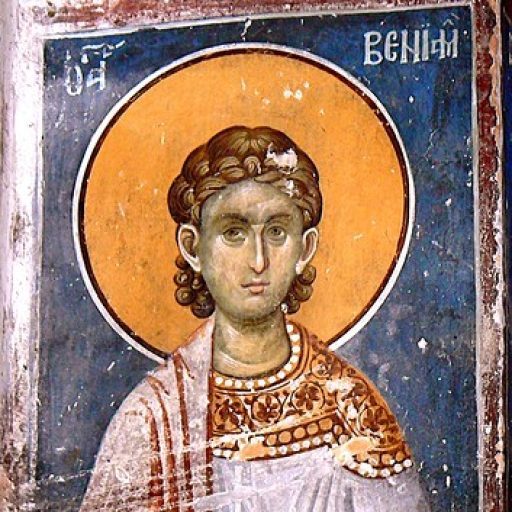
I came into the Catholic Church this past Easter (fittingly on the Latin calendar’s traditional date for the feast of St. Benjamin of Persia). It has been great so far! I’m sure the world will hear more about it through my blog as the years roll on (ha).
Ben Gruender is a theology enthusiast and social commentator, particularly focused on topics pertaining to the Great Schism of the Eastern and Western Churches, as well as modern issues related to gender.
The Tribe of Benjamin was situated between the Tribe of Ephraim and the Tribe of Judah. The former functioned as the head of the Northern Kingdom of Israel, while the latter reigned as the head of the Southern Kingdom of Israel. Being positioned on the border of the two kingdoms, Benjamin struggled to discern a side of the Schism to join. After initially fighting on behalf of the Northern Kingdom, in the end, Benjamin became the lone outside tribe to remain in union with the King of Judah.


 Tribe of Benjamin
Leave a comment